

Introduction
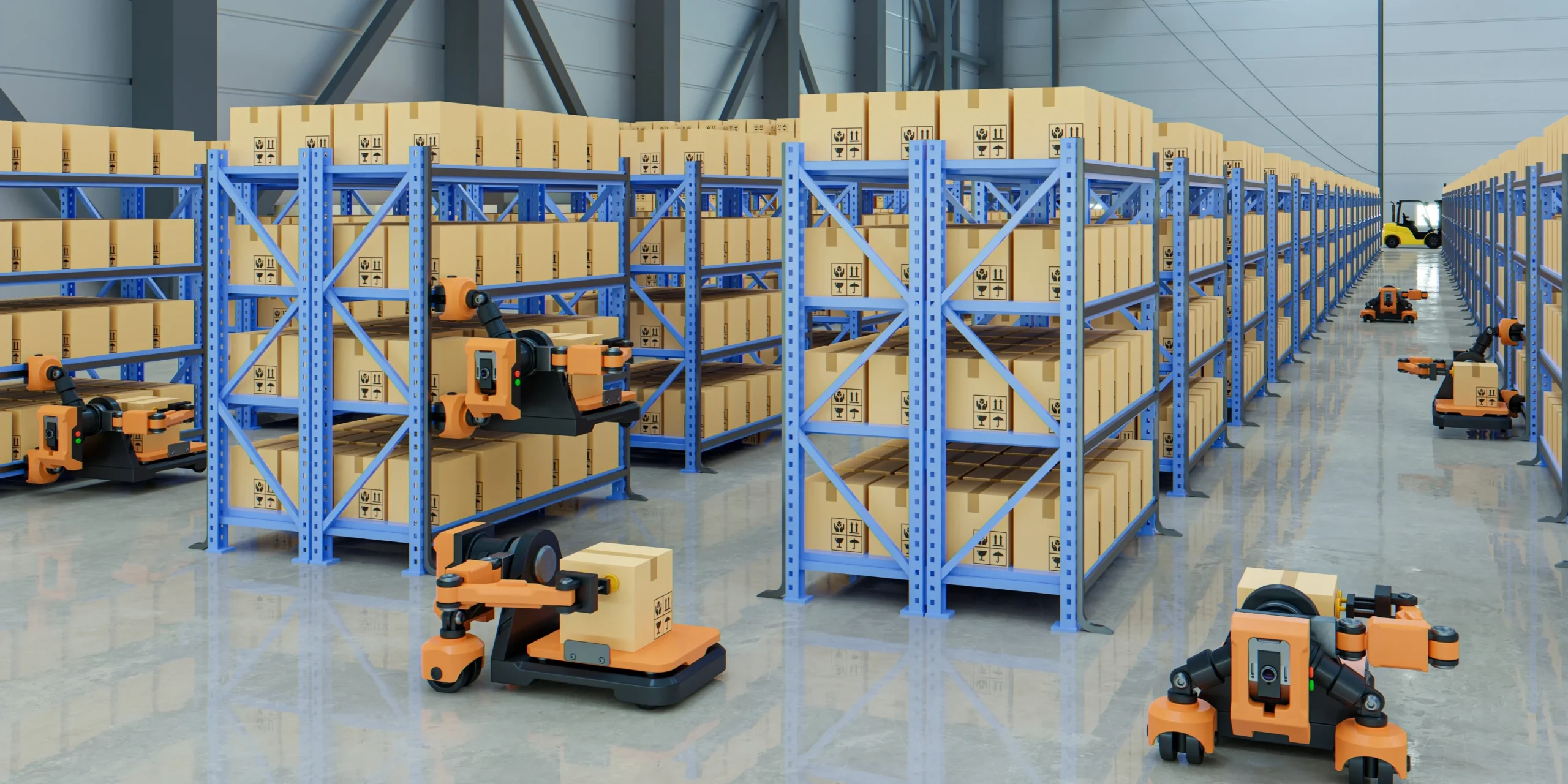
Warehouses once relied on armies of human workers to lift, sort, and ship goods. Today, robotics and automation are rapidly transforming the supply chain, turning warehouses into high-tech ecosystems where machines work alongside humans – or, increasingly, without them.
Warehouse robotics involves mobile robots, robotic arms, automated storage and retrieval systems (AS/RS), and AI-driven logistics software designed to maximize efficiency. In 2025, this technology is no longer optional; it is the backbone of global commerce.
Applications
Warehouse robotics is already reshaping industries worldwide:
- E-commerce: Amazon deploys over 750,000 robots in its fulfillment centers, handling tasks from shelf-stocking to order-picking (Amazon Robotics, 2024).
- Retail & Logistics: Walmart, DHL, and FedEx are investing in fleets of autonomous mobile robots (AMRs) for real-time inventory management.
- Manufacturing: Robotics arms powered by AI are handling delicate assembly and packaging tasks.
- Cold Storage: Automated systems are being introduced in temperature-sensitive environments, from pharmaceuticals to frozen foods.
Benefits
The adoption of robotics delivers powerful advantages:
- Speed: Robots can increase warehouse throughput by 2–3x compared to human-only operations (McKinsey, 2023).
- Accuracy: Computer vision and AI-driven scanning reduce picking and sorting errors.
- Cost Efficiency: Automation reduces reliance on seasonal or high-turnover labor.
- Scalability: Warehouses can scale operations without proportionally increasing workforce size.
- Resilience: Robotics mitigates disruptions caused by labor shortages, pandemics, or demand surges.
Challenges & Ethics
However, the robotic future of warehouses is not without drawbacks:
- Job Displacement: While robots reduce repetitive labor, they risk displacing warehouse workers, many of whom lack pathways into higher-skilled roles.
- Upfront Costs: Deploying large-scale robotic systems requires investments that can exceed $10 million for major facilities.
- Cybersecurity Risks: As logistics becomes more digital, vulnerabilities in robotic fleets could disrupt entire supply chains.
- Worker Adaptation: Human-robot collaboration raises safety, training, and ethical questions around labor practices.
Outlook
By 2030, the warehouse robotics market is projected to reach $57 billion globally (Fortune Business Insights, 2024). Advances in AI, 5G connectivity, and edge computing will further expand robot autonomy and coordination.
Expect:
- More hybrid facilities where humans oversee fleets of robots.
- Smaller warehouses adopting robotics as costs decline.
- Expansion into emerging economies, particularly Asia and Africa.
- Broader integration with green logistics, including energy-efficient robots and sustainable warehouse design.
Practical Takeaways
- For Businesses: Robotics is no longer a competitive edge – it’s becoming a baseline requirement for supply chain resilience.
- For Workers: Skills in robot maintenance, logistics software, and AI oversight are in rising demand.
- For Consumers: Faster, cheaper, and more reliable deliveries are direct results of warehouse automation.
Sources
- Amazon Robotics, 2024 Fulfillment Report
- McKinsey & Company, Automation in Logistics 2023
- Fortune Business Insights, Warehouse Robotics Market Forecast 2024–2030
- DHL, Robotics in Logistics White Paper, 2023






Leave a Reply